
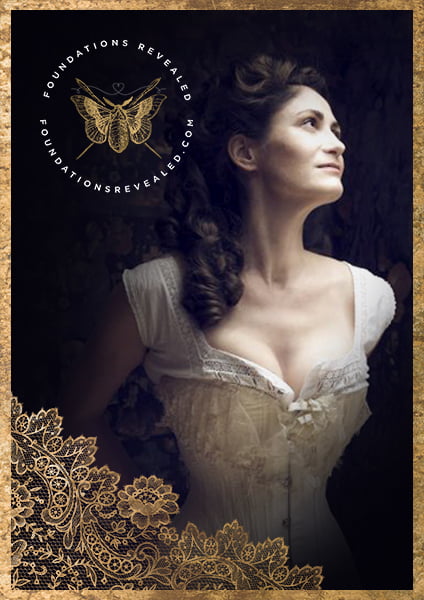
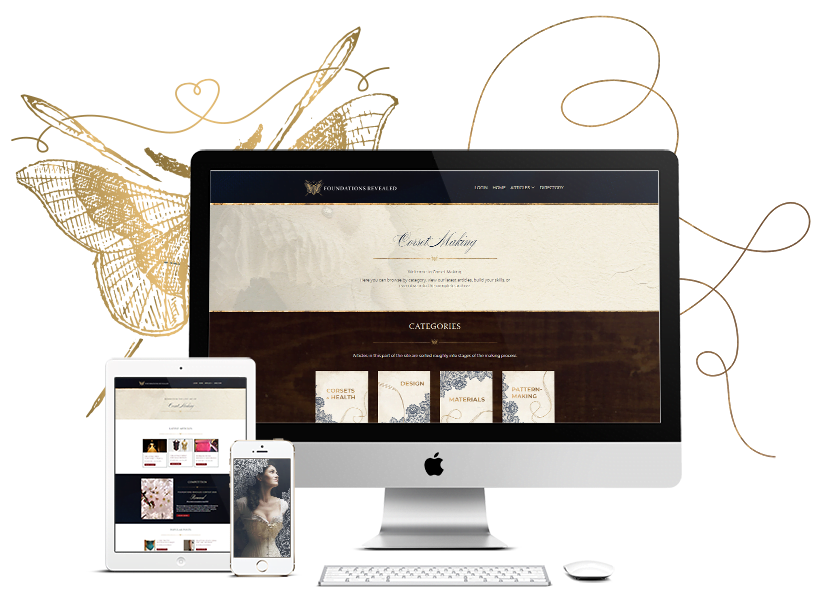
ABOUT FOUNDATIONS REVEALED

"I created Foundations Revealed to help us all work together to realise our wildest wardrobe dreams."
Since 2007, we have been helping aspiring costumers, historybounders, corsetieres and dressmakers around the world to live their best creative lives. Founder Cathy Hay and the Foundations Revealed team are passionate about helping makers to learn together, stay inspired and positive, maximise their skills and realise their sewing dreams.
FOUNDATIONS REVEALED CONTEST 2024:

Into Another World
#FRCompetition2024

Most of us have imagined escaping into other worlds. These might be the worlds of stories that seemed to leap right off the page, or magical places we’ve dreamt up ourselves. For this theme, take inspiration from fantasy of the past and present: whether from fairytales, folktales, and local legends or from an imagined world all of your own.
FOUNDATIONS REVEALED

ABOUT THE TEAM
Foundations Revealed is the work of a dedicated team, who are driven by a common mission to help our Stitchlings grow in both confidence and skill. Learn about our Founder, the Mentors who guide and nurture our Stitchlings and their work, and the team behind the scenes who ensure a smooth, friendly service.
ABOUT THE WRITERS
Since 2007, over 100 skilled professionals and passionate amateur makers have contributed to our unparallelled library of articles and tutorials, giving our Stitchlings step-by-step guides to everything from bullet bras to Medieval bliauts, and from tailored corsets to Victorian walking suits. These are their stories.
Check out some of our amazing Student work


“If it wasn't for FR, I wouldn't feel brave enough to try or learn how to do the new things that I used to be hesitant about. Bring on those big sleeves and bonnets 1830s, I'm not afraid of you any more!”
leah christlanda
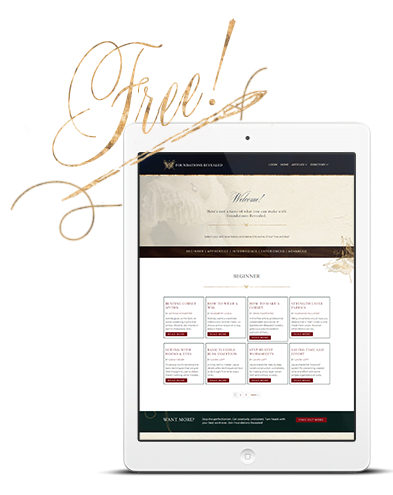
WANT TO TRY FOUNDATIONS REVEALED
for free?
Can't wait? Our free level offers a complimentary taster from our vast maker's library. A selection of hand-picked articles and tutorials will help move you closer to sewing the clothing you really want to wear, right now. Oh - and they're broken down by skill level so that there's something for you, no matter where you are in your sewing journey.